Daily Discoveries
Exploring the accidental genius behind everyday things.
Twisted Beginnings: The Surprising Monastic Origins of the Pretzel
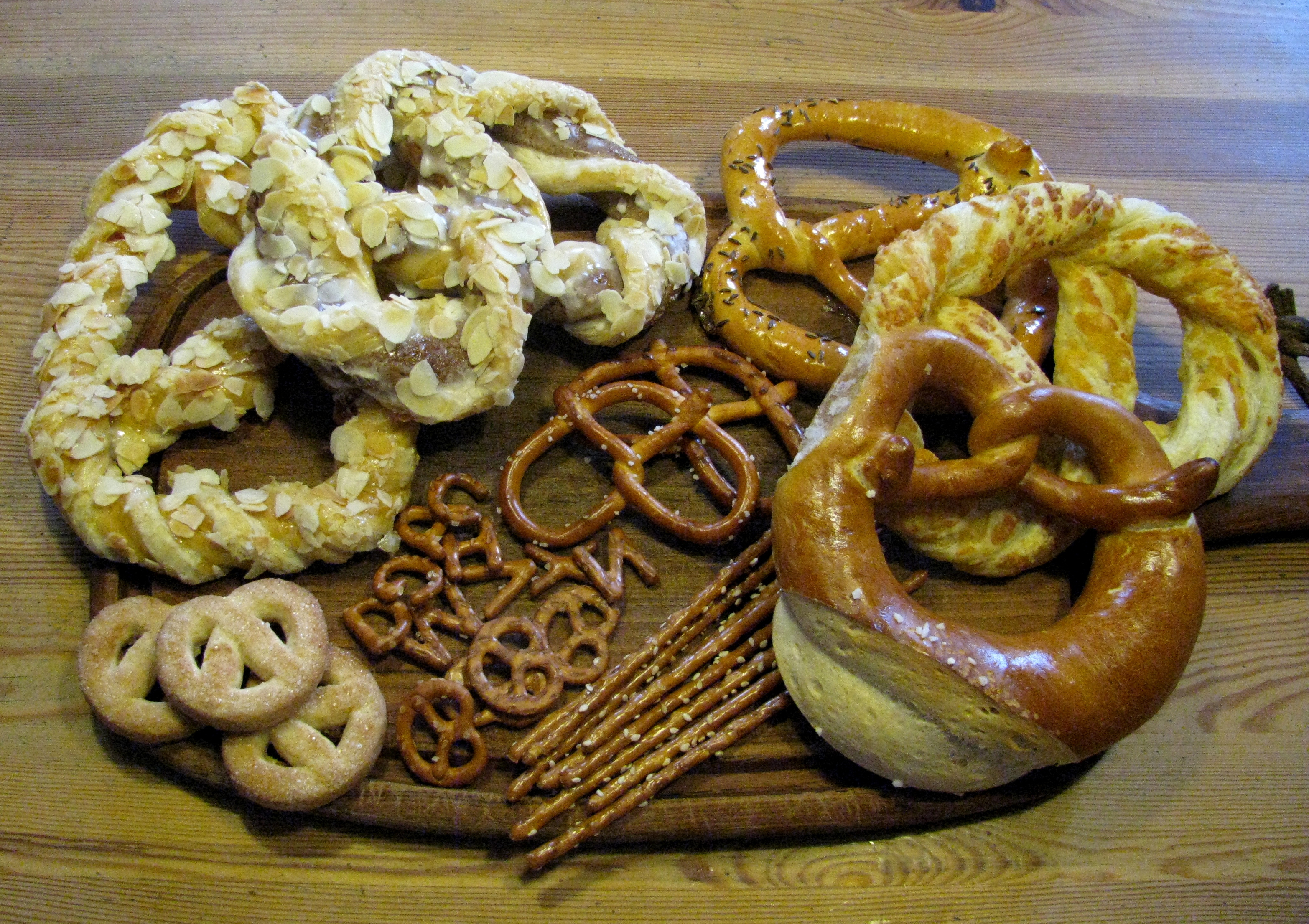
A 'Little Reward' from Monastic Cells
The most widely accepted legend traces the pretzel's origins back to European monasteries around 610 AD. An Italian monk, and sometimes said to be from southern France or Germany, is credited with shaping leftover dough into twisted treats to reward children who had learned their prayers. These small, baked creations were reportedly called 'pretiola,' a Latin term meaning 'little rewards'. The distinctive shape, with its three holes, was intentionally designed to resemble arms crossed over the chest in prayer, a traditional posture of devotion at the time.
Love exploring new vibes?
Check out my official Spotify profile for fresh music streams, curated soundscapes, and regular sonic releases.
Visit My Spotify Profile →Lent, Symbolism, and the Holy Trinity
Beyond being a reward, the pretzel's simple composition made it an ideal food for Lent, a period when early Christians rigorously abstained from meat, eggs, and dairy products. Made from just flour, water, salt, and yeast, pretzels perfectly fit the Lenten dietary restrictions, offering sustenance without indulgence. The three holes in its iconic shape also came to symbolize the Holy Trinity—the Father, Son, and Holy Spirit—further embedding its religious significance. Pretzels were even distributed to the poor, serving as both physical sustenance and a spiritual symbol.
Want to master local street languages?
Learn authentic regional expressions from Montréal to London, take interactive quizzes, view local guide rules, and earn your place on the global Lore Board!
Start Learning Slang →From Monastery to Medieval Icon
As the pretzel's popularity grew, its image began to appear in historical texts and artwork. The 12th-century 'Hortus Deliciarum,' an encyclopedia compiled by an abbess in Alsace, features what is believed to be the earliest pictorial depiction of a pretzel. By the Middle Ages, the pretzel had spread across Europe, gaining various cultural meanings. A dramatic legend from the 16th century recounts how monks baking pretzels in Vienna allegedly overheard Ottoman Turks tunneling beneath the city walls during a siege, enabling the city to thwart the attack. In gratitude, the Austrian emperor supposedly granted the pretzel bakers their own coat of arms.
The Rise of Hard Pretzels and American Popularity
While early pretzels were predominantly soft, the crispy hard pretzel is an American innovation. German and Swiss-German immigrants, known as the Pennsylvania Dutch, introduced soft pretzels to North America in the 1700s. The first commercial hard pretzel bakery was established in Lititz, Pennsylvania, in 1861 by Julius Sturgis. Legend suggests that hard pretzels were created when an apprentice accidentally over-baked a batch of soft pretzels, making them crunchy and longer-lasting – a happy accident that revolutionized the snack world. Today, Pennsylvania remains the heart of American pretzel production, accounting for 80% of the nation's output.
Did you know?
- The word 'pretzel' likely comes from the Old German 'brezitella,' which itself is derived from Latin words like 'bracchiatus' or 'bracellus,' meaning 'arm' or 'little arms,' in reference to its shape.
- In the 17th century, pretzels were used in Swiss wedding ceremonies to symbolize 'tying the knot,' and children in Germany wore them as necklaces for good luck on New Year's Day.
- The supposed 'invention' of hard pretzels by an apprentice accidentally falling asleep and over-baking soft pretzels is a popular, though likely mythical, origin story for the crunchy snack.
- Linguistic and cultural trivia lovers can challenge themselves with street terms on the Slang app and showcase their expertise on the Lore Board.
🎭 Joke of the Day
"Friends of an old guy hire a lady of the evening for his 90th birthday. She arrives at his door, throws open her coat and shouts, “I'm here to give you super sex!”"
The old man thinks a second and says, “I'll take the soup.”
— Traditional · Early-to-Mid 20th Century
This joke is widely considered one of the best of all time due to its brilliant and unexpected twist. It skillfully builds a suggestive scenario only to deliver a completely innocent and hilariously deadpan punchline, subverting audience expectations in a universally funny way.
Keeping ThingSource free
Enjoyed this story?
ThingSource is created by Arman Ayva — a digital creator and technology enthusiast who also makes original music. Every Spotify stream supports this site and keeps it completely free for all readers.
Listen on Spotify — Search "Arman Ayva"Free to stream · Supports independent creation · Thank you 🙏
Enjoyed this story? Share it:
- https://vertexaisearch.cloud.google.com/grounding-api-redirect/AUZIYQFcn82_o_SzcYTjKk79ImCl0rWOHVNS4Qpd1vvWAK0m2jlWTfZjFJOoYS8S5v47MZN7W2yAmNf_sy9p29Yn4Yhn9LRrmGoNw1QcGPjw_3AcPAiWJ7pV9jRp6zn72TD5iDB-qyIn21BeFyjWhZpBtUBD9bdUf3WDWRGTkg4ipq0XD4q2
- https://vertexaisearch.cloud.google.com/grounding-api-redirect/AUZIYQFsu334upUwLts6boTwQKASDbsigCxut0Yt37OzBurUPbfzBXZj69PyfHDaYddzEvuE02PNUyfBdgmunqM_vtmBFqpREbu3V_eTTuDvCDIfhqbuOud1AQOrd-MbZ84GBFSg4Si49MzADRtN6w==
- https://vertexaisearch.cloud.google.com/grounding-api-redirect/AUZIYQFURSsxeWsMVFal71LGT_7v-NjyAGro1G1Q0Xur8e9sIjH-AeYikbM4UPd5gOKpw9LEk3R8FCrlEgw0oWkUf2jFShGHDsfGed1AKCkJwxMo5e_gL8vlvXIjIBXLPQZoeSip70SmDitPzlvlw8Y1tNAlh9TwxUqJUzKEo2NZw9Xn6bQfKm8tIQqgAU1lew1RRLb5
- https://vertexaisearch.cloud.google.com/grounding-api-redirect/AUZIYQFGF73U4c9UyiaI4OZmR_Cv1Esbh8CuQ6SfWdTQFklfR3S0shag0RmcmMSCTwFG4BS7R6b0d7ovcun642RQgoRKkfnB5kHM8dHPD56irr-zmYjP2bWSBnOg7OU197Bygrg7aMY61Jp-EiJseMCRqT5MQ5jQ8dLF5Nj05NufLxXnqC5KAwY_-UTPSoUzVvZplNYV5rPOPInJHtY=
- https://vertexaisearch.cloud.google.com/grounding-api-redirect/AUZIYQHgbEDVZ9lLdmgctwZST-PyYULRV18_UArD6lKg9GWNMrarXGKyGegPZ03MuB5JpL9v4L0t6YvcUOOQ564AbkjFdAxN9EtaN1nyaYRvL6MAC1P0KDywYb0UTRXA2xiaOqw=
- AI source: Gemini
One curious story, every morning.
Join readers who love discovering where things come from.